
The Power Couple of 2026 Digital Growth: Why SEO & PPC Need to Stop Competing and Start Coexisting
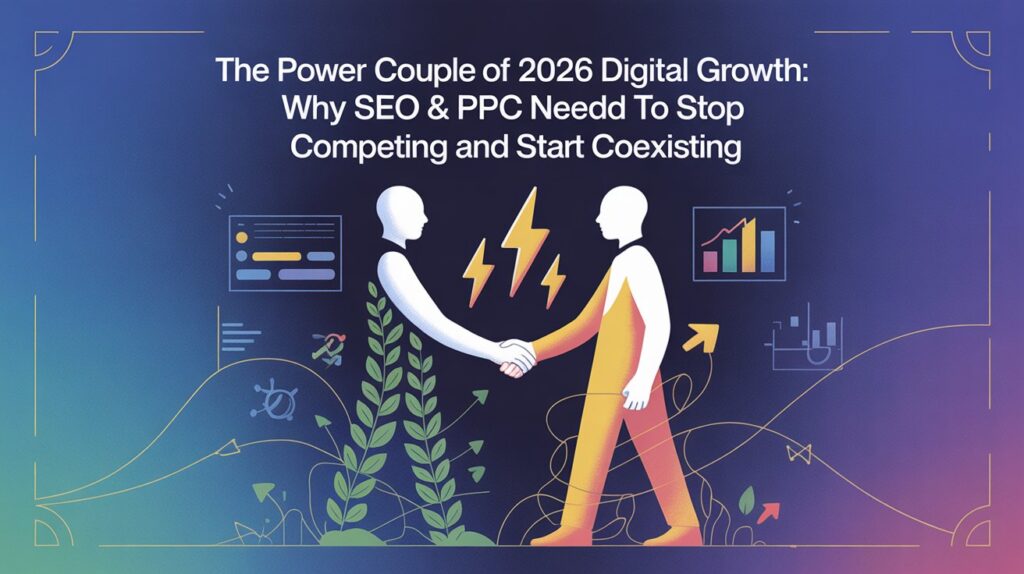
For years, marketing departments have treated Search Engine Optimization (SEO) and Pay-Per-Click (PPC) advertising like bitter rivals competing for the same crown. The SEO purists claimed organic traffic was the only sustainable way to build long-term value, while the PPC crowd argued that organic search was simply too slow and that paid ads were the only guarantee for immediate revenue.
But as we navigate 2026, the digital landscape has completely rewritten the rules of the game.
With AI-driven search overviews fundamentally changing how search layouts look, privacy regulations reshaping data collection, and ad costs continuing to fluctuate, treating SEO and PPC as isolated silos is no longer just inefficient—it’s bad for business.
The most successful brands today don’t choose between organic and paid. They use them together to create a unified search strategy. Here is how we combine the science of SEO and the speed of PPC to dominate the digital space.
1. The Dynamic Feedback Loop: Using PPC as an SEO Testing Lab
The biggest frustration with SEO has always been time. It can take months of content optimization, structural updates, and technical adjustments to see a page climb to the first page of search results. If you optimize for the wrong consumer intent, you’ve wasted precious time.
PPC solves this timeline crisis. Think of paid ads as your rapid-testing laboratory for long-term SEO.
The Strategy:
Before investing months into building extensive content hubs or landing pages for a new set of target keywords, run a highly targeted, short-term PPC campaign.
- Test for Intent: Does a specific search term actually drive real business conversions, or just empty traffic?
- Test the Messaging: Which ad headlines yield the highest click-through rate (CTR)?
- The Takeaway: Take the winning headlines and copy elements from your highest-performing paid ads and use them to craft your organic page titles, meta descriptions, and blog headings. You are essentially letting a small paid budget de-risk your long-term organic strategy.
2. Dominating Search Real Estate: The 1 + 1 = 3 Effect
There is a powerful psychological phenomenon in consumer behavior known as the double-exposure effect. When a user types a query into a search engine and sees your brand name prominently at the very top as a paid ad, and sees your brand as a top organic result, your credibility multiplies.
The Strategy:
Don’t pause your PPC ads just because you finally ranked #1 organically for a high-value search term. Bidding on keywords you already rank for organically yields an overall net increase in clicks because you effectively crowd out your competitors. If you own both the paid slot and the organic slot, you drastically reduce the chance of a user clicking on a rival link.
3. The Balanced Budget: Keyword Efficiency Mapping
Ad-spend efficiency is everything in 2026. If you are blindly bidding on every keyword relevant to your business, you are likely burning through your budget on terms that could be captured for free. Conversely, if you are relying entirely on organic reach for highly commercial terms, you are losing immediate sales to nimbler competitors.
4. Retargeting the Organic Stream
Organic search is incredible for bringing in top-of-funnel users who are looking for information. They have a problem, they find your insights, they read your solutions, and then… they leave. That isn’t a failure of SEO; it’s just the natural customer journey.
This is exactly where PPC steps back into the frame to close the loop.
The Strategy:
Set up dedicated tracking segments for users who land on specific high-value organic blog posts. Then, build a tailored PPC retargeting campaign on search networks or social channels.
Since the user already knows your brand and has interacted with your expert content (thanks to SEO), your retargeting ads don’t need to introduce who you are. They can jump straight to a high-intent offer—like a free trial, a downloadable tool, or a direct consultation.
The Unified Search Paradigm
In 2026, search engine marketing isn’t a collection of distinct channels anymore; it’s an integrated ecosystem. Whether operating globally or navigating the unique, rapidly digitizing local markets here in Wayanad, businesses cannot afford to let their marketing channels fight each other.
When your SEO data and your PPC metrics live in the same room, your marketing spend goes further, your insights become sharper, and your digital presence becomes untouchable.
Are your SEO and PPC campaigns working in harmony?
If your organic content strategy isn’t talking directly to your paid ad accounts, you are leaving money on the table. Let’s collaborate to build a unified search strategy that maximizes your visibility, cuts down on wasted ad spend, and drives sustainable conversions for your business.
Connect with Abu Shebin V I today to design your 2026 Unified Search Strategy